When to Upgrade Your Electrical Panel:
7 Signs You Shouldn't Ignore
Chris Nickel
Red Seal Journeyman Electrician — CN Electrical, Chilliwack, BC
You should upgrade your electrical panel if your breakers trip frequently, your lights flicker when appliances start, the panel feels warm or buzzes, you still have a fuse box, you're out of breaker slots, or you're adding a major load like an EV charger or basement suite. A standard 100A-to-200A panel upgrade in Chilliwack typically costs $2,500–$5,000 and takes 1–2 days. Not sure if it's a panel issue or a simpler repair? Our residential electrical repair and diagnostics service pinpoints the problem before you commit to a full upgrade. If any of the seven signs below sound familiar, your panel is telling you it's time.
Your electrical panel is the heart of your home's electrical system. Every outlet, light fixture, and appliance in your house connects back to it. When it's working properly, you barely think about it. But when it's overloaded, outdated, or failing, the signs are there — and ignoring them isn't just inconvenient, it's dangerous. A timely electrical panel upgrade protects your family, increases your home's value, and gives you the capacity you need for modern living.
The Canadian Electrical Code has evolved significantly over the past 30 years. A panel that was perfectly adequate when your home was built in the 1980s or 1990s is almost certainly undersized for how we live today. Modern homes have more electronics, more kitchen appliances, home offices, entertainment systems, EV chargers, hot tubs, and basement suites — all drawing power simultaneously. Your panel needs to keep up.
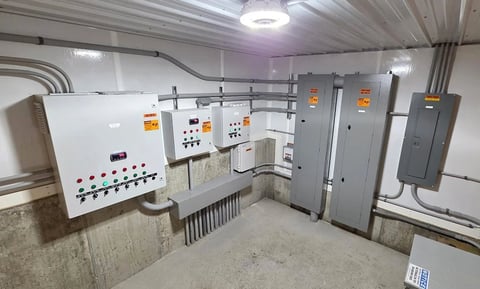
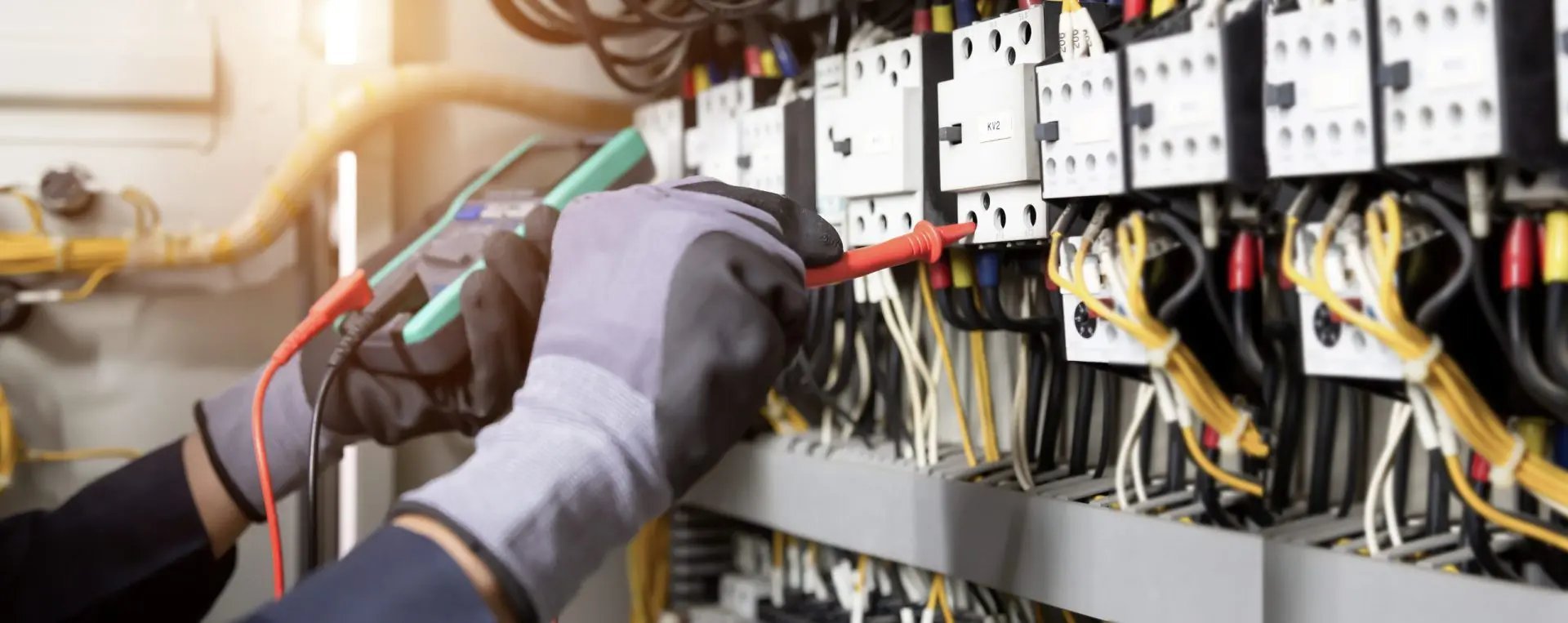
At CN Electrical, we've assessed thousands of panels in Chilliwack homes — from 60-amp fuse boxes in 1960s bungalows to 100-amp breaker panels in 1990s two-storeys that are now bursting at the seams. If you recognize any of the signs below, our licensed panel upgrade electricians and TSBC permit coordination make the process straightforward. For commercial properties, our commercial electrical repair team handles panel assessments and upgrades for businesses, warehouses, and multi-unit buildings. This guide draws on that real-world experience. We'll walk you through the seven most common signs that it's time for a panel upgrade, what the upgrade process involves, and what you can expect to pay in the Fraser Valley.
What You'll Learn in This Guide
Click the quick-links below to view any section.
- 1.Your Breaker Keeps Tripping — and It's Not Just One Circuit
- 2.Your Lights Flicker or Dim When Appliances Kick On
- 3.The Panel Feels Warm, Smells Like Burning, or Makes a Buzzing Sound
- 4.You Still Have a Fuse Box Instead of Circuit Breakers
- 5.You're Out of Breaker Slots — and Using Tandem Breakers as a Workaround
- 6.You're Adding a Major Appliance, EV Charger, or Home Addition
- 7.Your Home Has Aluminum Wiring or a Panel Recalled for Safety Issues
Plus: what a panel upgrade costs in BC, how long it takes, and when you should call a licensed electrician.
Your Breaker Keeps Tripping — and It's Not Just One Circuit
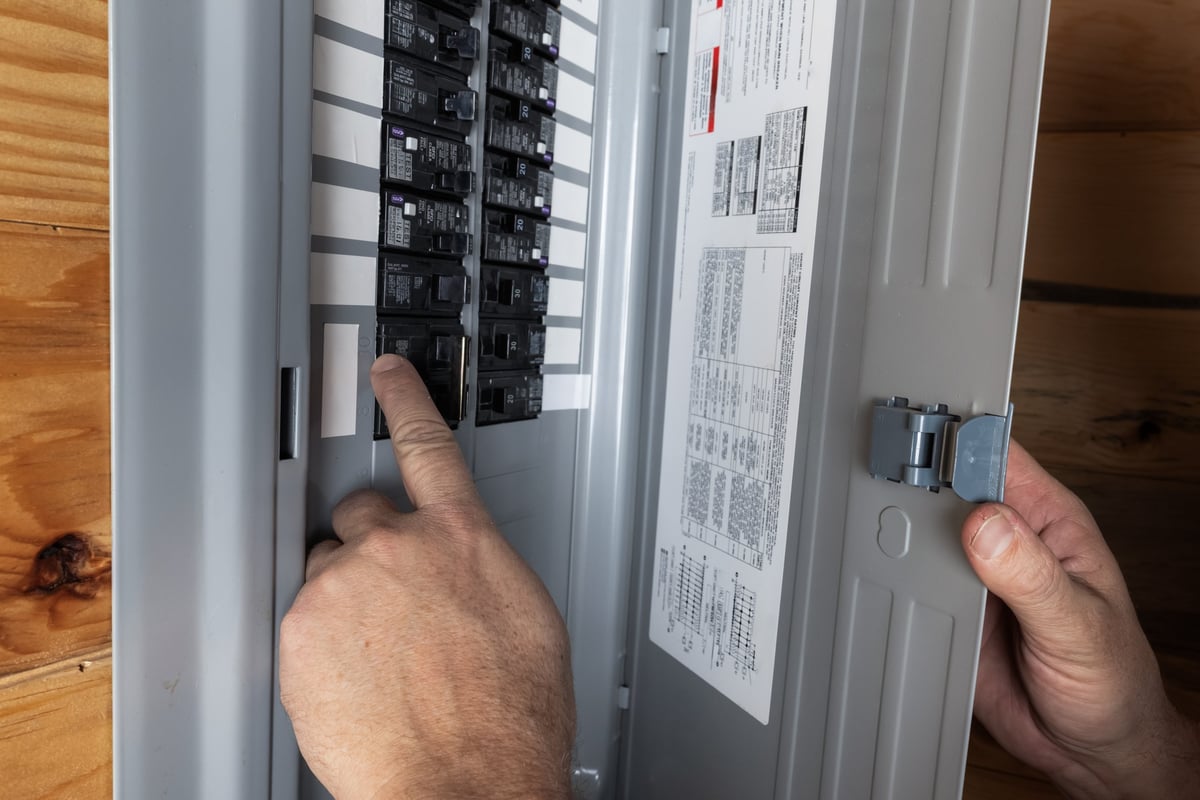
A breaker that trips occasionally isn't unusual — maybe you ran the toaster and the kettle on the same kitchen circuit. But when multiple circuits trip regularly, or the main breaker trips and kills power to the entire house, that's a systemic problem. It means your panel can't deliver the total amperage your home is asking for.
- Breakers trip when the current flowing through them exceeds their rating — typically 15A or 20A for branch circuits. If the circuit is overloaded, the breaker does exactly what it's designed to do: it cuts power to prevent the wiring from overheating.
- When several circuits trip on different days, in different parts of the house, and the appliances on those circuits aren't faulty, the common denominator is the panel. The total demand on your service is exceeding what the panel can distribute. This is especially common in homes with 100A services that are running modern kitchens, home offices, and entertainment systems simultaneously.
- A single nuisance trip might be a faulty appliance. But a pattern of trips across multiple circuits — especially when they happen during normal, everyday use — is a strong signal that your panel is at capacity. A load calculation (which we perform for free during an on-site assessment) will tell you definitively whether your service size matches your actual usage.
Safety Warning
If a breaker trips and immediately trips again when you reset it — do not keep resetting it. There may be a short circuit or ground fault. Call an electrician.
100A
Typical 100A Panel Capacity
Your Lights Flicker or Dim When Appliances Kick On
Do your lights dim for a split second when your fridge compressor starts? Does the microwave make the kitchen lights flicker? This isn't just annoying — it's a sign that large appliances are pulling voltage down because your panel and service can't meet the inrush current demand.
- Motors and compressors — in your fridge, air conditioner, furnace blower, and well pump — draw a surge of current (called inrush current or locked-rotor current) when they start. This surge can be 3–5 times the appliance's normal running current for a fraction of a second. A properly-sized electrical service absorbs this surge without you noticing.
- When your lights noticeably dim on startup, it means the voltage drop during the surge is significant enough to affect other circuits. This happens because the total impedance of your service — from the transformer through your panel — is too high for the load being placed on it. In practical terms: your 100A service is struggling to deliver what your home is asking for.
- Occasional, very subtle dimming when a large central AC unit starts might be normal. But dimming that's visible with everyday appliances — the microwave, the vacuum, the fridge — or that affects LED bulbs (which are much less sensitive to voltage fluctuations than incandescents) is not normal and warrants an assessment.
3–5×
Inrush Current vs. Running Current
The Panel Feels Warm, Smells Like Burning, or Makes a Buzzing Sound
This is the most serious category of warning signs and the one you should act on fastest. A properly functioning electrical panel should be cool to the touch and completely silent. Heat, odour, or sound from the panel means something is wrong at the component level.
- A warm panel or warm breakers mean there's resistance somewhere it shouldn't be — a loose connection on the bus bar, a breaker that isn't making solid contact, or a conductor that's undersized for its load. That resistance generates heat, and in an enclosed panel, heat builds up and accelerates the degradation of every component inside.
- A buzzing or humming sound from the panel often indicates a loose breaker connection or a failing breaker that's arcing internally. A loud buzz that changes with the load on the circuit is especially concerning. Crackling or sizzling sounds are an emergency — they indicate active arcing inside the panel.
- A fishy or burning-plastic smell means insulation is breaking down from heat. Once the insulation on a conductor or bus bar coating starts to degrade, the panel is compromised and needs to be replaced — not just repaired. This is not a 'keep an eye on it' situation.
Safety Warning
If your panel is warm, buzzing, or smells like burning, turn off the main breaker if you can do so safely and call a licensed electrician immediately. Do not open the panel door if you hear crackling or see smoke.
You Still Have a Fuse Box Instead of Circuit Breakers
If your home still has a fuse box — with those round glass fuses that screw in — your electrical service predates modern safety standards. Fuse boxes were standard in homes built before the 1960s, and while they can still function, they were designed for the electrical loads of the mid-20th century, not the 2020s.
- Fuse boxes are typically 60-amp services. A modern home needs 100 amps at minimum, and 200 amps is the current standard for a single-family home with an EV charger, basement suite, or hot tub. A 60-amp fuse box was designed for a home with a few lights, a fridge, and a radio — not a home office, two TVs, a microwave, a dishwasher, and a home server.
- The other risk with fuse boxes is what we find when we open them: it's common to see 30-amp fuses screwed into 15-amp circuits because the homeowner got tired of replacing fuses. This defeats the overcurrent protection entirely — the wiring can overheat and fail before the fuse blows. We've also seen pennies jammed behind fuses, which is an extreme fire hazard.
- A fuse box replacement is not a like-for-like swap. It involves upgrading the service entrance, the meter base, and the entire panel — essentially a full 100A or 200A service upgrade. The good news is that once it's done, you'll have modern circuit breakers, proper labelling, and enough capacity for everything you plug in.
Safety Warning
Never install a larger fuse than the circuit is rated for. A 30A fuse on a 15A circuit will not blow until the wiring is already overheating — and by then it may be too late.
You're Out of Breaker Slots — and Using Tandem Breakers as a Workaround
A panel that's physically full — every slot occupied — can't accommodate any new circuits. If you want to add a dedicated circuit for a home office, a workshop, or outdoor lighting and there's no space, your panel has reached its physical limit. Some homeowners (or handymen) work around this by installing tandem breakers, but this has limitations.
- Tandem (twin) breakers fit two circuits into a single panel slot. They're a legitimate product, but they're meant to be a space-saving solution within a panel that's rated for them — not a way to cram more circuits into a panel that's already at its designed capacity. Many older panels aren't listed for tandem breakers at all, and even in panels that are, there's a limit to how many the bus bar can handle.
- More importantly, the physical space in the panel is only half the equation. A full panel almost always means the electrical load on the service is at or near capacity too. Adding tandem breakers doesn't increase the service size — it just lets you connect more circuits to a service that's already overloaded. You haven't solved the problem; you've hidden it.
- A new 200A panel typically has 30–40 spaces — enough for your existing circuits plus room for future expansion. At CN Electrical, we install panels with extra capacity by default because we know that five years from now, you'll probably want to add an EV charger, a hot tub circuit, or workshop power — and you shouldn't have to upgrade your panel a second time.
You're Adding a Major Appliance, EV Charger, or Home Addition
Sometimes the trigger for a panel upgrade isn't a problem with the existing system — it's a planned addition that your current panel simply can't support. An EV charger alone can require a 30A–60A dedicated circuit. A hot tub needs 50A–60A. A basement suite adds an entire secondary living space worth of electrical demand.
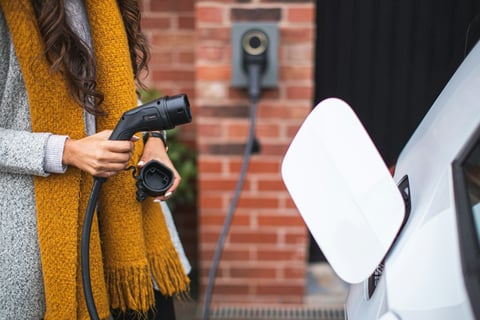
- A Level 2 EV charger typically requires a dedicated 240V circuit rated at 30A, 40A, 50A, or 60A — depending on the charger model and your driving habits. That single addition can consume 25–50% of a 100A panel's total capacity. Add a hot tub (another 50A), and you've used nearly the entire service before you've even turned on a light. For a complete walkthrough of the installation process, see our <Link to="/blog/home-ev-charger-installation-guide" class="text-brand hover:text-brand-dark underline transition-colors">home EV charger installation guide</Link>.
- A basement suite or home addition is essentially adding a second kitchen, bathroom, living area, and bedroom — complete with their own appliance circuits, lighting circuits, and receptacle circuits. The electrical load calculation for a legal secondary suite typically pushes a 100A service well past its safe limit.
- The best time to upgrade your panel is before you install the new appliance, not after. It's significantly cheaper to do the panel upgrade and the new circuit installation as a single job. And if you're planning both an EV charger and a future hot tub, we can size the new service to accommodate both from day one.
50A
Typical EV Charger Circuit
Your Home Has Aluminum Wiring or a Panel Recalled for Safety Issues
Two specific safety issues deserve their own category: aluminum branch circuit wiring and certain panel brands that have been recalled or are known fire hazards. If either applies to your home, the recommendation isn't 'consider an upgrade' — it's 'schedule one.'
- Aluminum wiring was installed in many Canadian homes built between 1965 and 1976. Aluminum expands and contracts more than copper with temperature changes, which can cause connections to loosen over time. Loose connections create resistance, which creates heat, which can lead to arcing and fire. While aluminum wiring can be made safe with proper copper pigtailing and antioxidant paste at every connection, homes with aluminum wiring almost always need panel work as part of the remediation.
- Some panel brands — notably Federal Pacific Electric (FPE) Stab-Lok panels and certain Zinsco panels — have been linked to high failure rates. FPE breakers have been found to fail to trip up to 60% of the time during testing, meaning they provide no overcurrent protection. These panels were installed widely in the 1960s through 1980s and are still present in many Chilliwack homes. If your panel says 'Federal Pacific,' 'FPE,' or 'Zinsco,' it should be replaced regardless of its apparent condition.
- Even if your panel isn't a recalled brand, panels older than 25–30 years are past their designed service life. Breakers can become unreliable, bus bar connections can corrode, and the panel's internal components simply wear out. If your panel is original to a home built in the 1980s or earlier, it's time.
Safety Warning
Federal Pacific Electric (FPE) Stab-Lok panels have been identified as a fire hazard by multiple safety authorities. If you have an FPE panel, replace it as soon as possible — don't wait for symptoms to appear.
Panel Upgrade Cost Breakdown — Chilliwack, BC
A 100A-to-200A service upgrade is the most common panel upgrade we perform. Here's what the costs look like for a typical single-family home in the Fraser Valley.
New 200A panel & main breaker
$500 – $900
New meter base & service entrance
$400 – $800
Labour (8–16 hours)
$1,000 – $2,000
Permit & inspection fees
$200 – $400
Misc. (breakers, connectors, labels)
$200 – $500
Drywall repair & paint (if needed)
$150 – $400
Total Estimated Range
$2,500 – $5,000
Includes materials, labour, permits, and Technical Safety BC inspection
Larger homes, underground services, or panel relocations may increase the total. Every quote includes a free on-site load calculation.
What a Panel Upgrade Looks Like — Start to Finish
On-Site Assessment & Load Calculation
We visit your home, inspect your existing panel and service entrance, perform a load calculation based on your current and planned electrical loads, and provide a firm written quote. This typically takes 45–60 minutes.
BC Hydro Coordination & Permit Application
We coordinate with BC Hydro to schedule the service disconnect and reconnect. We also submit the Technical Safety BC installation permit — you don't deal with any paperwork.
Installation Day — Panel & Service Upgrade
BC Hydro disconnects power at the mast. We remove the old panel and meter base, install the new 200A service entrance, meter base, and panel, and transfer all circuits. For a standard upgrade, this takes 6–10 hours.
Inspection & Reconnect
BC Hydro reconnects power. The Technical Safety BC inspector visits (usually within 1–3 days), reviews the installation, and issues the Certificate of Inspection. You're fully compliant and covered.
A Word About Safety
If your panel is warm to the touch, smells like burning plastic or fish, makes a buzzing or crackling sound, or you see scorch marks around breakers — call a licensed electrician immediately. These are signs of an active electrical fault that can lead to a fire. Do not attempt to open the panel or diagnose the problem yourself.
CN Electrical provides emergency electrical services in Chilliwack and the Fraser Valley. If you're experiencing any of these urgent warning signs, call us at 1-604-798-1847.
Is Your Panel Trying to Tell You Something?
If any of these seven signs hit close to home, don't wait. A panel upgrade is an investment in your family's safety and your home's electrical capacity — and it costs less than you might think.