Electrical Safety in Older
Chilliwack Homes: What to Look For
Chris Nickel
Red Seal Journeyman Electrician — CN Electrical, Chilliwack, BC
The most common electrical hazards in older Chilliwack homes are aluminum branch circuit wiring (1965–1976 builds), knob-and-tube wiring (pre-1950), ungrounded two-prong outlets, and outdated fuse boxes or recalled panels like Federal Pacific Electric Stab-Lok. These aren't just code violations — they're active fire and shock risks. Our licensed residential electrical repair electricians diagnose these hazards daily, and our home renovation specialists perform code-compliance electrical safety assessments that identify every hazard and provide a prioritized remediation plan. The good news: most issues can be fixed without rewiring the entire home.
Chilliwack has a rich inventory of older homes — character bungalows from the 1950s and 60s, downtown-era homes from the 1940s, and farmhouses from even earlier. These homes have charm, mature landscaping, and solid construction. What they don't always have is electrical systems that meet modern safety standards. A home built in 1965 was wired for the electrical loads of 1965 — a few lights, a fridge, a radio, and maybe a television. It was not wired for home offices, multiple TVs, gaming systems, microwave ovens, and EV chargers.
The Canadian Electrical Code has evolved dramatically over the decades — and for good reason. Every major revision was driven by what we learned from electrical fires and incidents. The wiring methods, grounding requirements, and overcurrent protection that were standard in the 1960s are now known to be inadequate and, in some cases, actively dangerous. If you're planning a kitchen or bathroom renovation, the existing wiring almost certainly needs upgrading to meet current code requirements.
This guide identifies the five most common electrical hazards in older Chilliwack homes, explains why each one matters, and tells you what remediation looks like — from the least invasive fix to a full home rewire in Chilliwack. At CN Electrical, we perform electrical safety assessments weekly for homeowners who just bought an older property, are planning renovations, or simply want peace of mind.
What You'll Learn in This Guide
Click the quick-links below to jump to any section.
- 1.Aluminum Branch Circuit Wiring — The 1965–1976 Problem
- 2.Knob-and-Tube Wiring — Still Present in Pre-1950s Homes
- 3.Two-Prong Ungrounded Outlets — No Ground, No Protection
- 4.Fuse Boxes Instead of Circuit Breakers
- 5.Recalled and Hazardous Electrical Panels
- 6.What a Professional Electrical Safety Assessment Covers
Plus: what a professional electrical safety assessment covers, typical remediation costs, and when a full rewire is the right call.
Aluminum Branch Circuit Wiring — The 1965–1976 Problem
Aluminum branch circuit wiring was installed in an estimated 450,000 Canadian homes between 1965 and 1976 — a period when copper prices spiked and builders turned to aluminum as a cheaper alternative. Many Chilliwack homes from this era still have it, and it's the single most common electrical hazard we find during safety assessments.
- The fundamental problem with aluminum wiring is thermal expansion. Aluminum expands and contracts significantly more than copper with temperature changes — 38% more per degree. Every time a circuit carrying current heats up and cools down, the aluminum wire expands and contracts at every connection point: the breaker terminal, the wire nut, the outlet screw terminal. Over decades, this microscopic movement loosens connections.
- Loose connections create electrical resistance. Resistance creates heat. In an enclosed junction box or behind an outlet, that heat can degrade insulation, melt the device, and eventually cause arcing — an electrical discharge that can reach thousands of degrees and ignite surrounding materials. This is how aluminum wiring causes electrical fires.
- The two approved remediation methods are: (1) COPALUM crimp connectors — a specialized cold-welding tool bonds a copper pigtail to the aluminum wire, creating a permanent, gas-tight connection that eliminates the dissimilar-metal problem; or (2) AlumiConn lug connectors — a set-screw connector rated for aluminum-to-copper connections that uses an antioxidant compound to prevent oxidation. Both methods leave you with copper tails connecting to every device, which is the same safe configuration as a copper-wired home. COPALUM requires a licensed electrician with the specialized crimping tool — it is not a DIY repair.
Safety Warning
Never use standard wire nuts (even the 'purple' ones) as a permanent aluminum wiring fix. The only UL-listed remediation methods are COPALUM crimps and AlumiConn lugs. Standard wire nuts have failed in laboratory testing and are not recognized as a permanent repair by the Canadian Electrical Code.
1965–76
Aluminum Wiring Installed
Knob-and-Tube Wiring — Still Present in Pre-1950s Homes
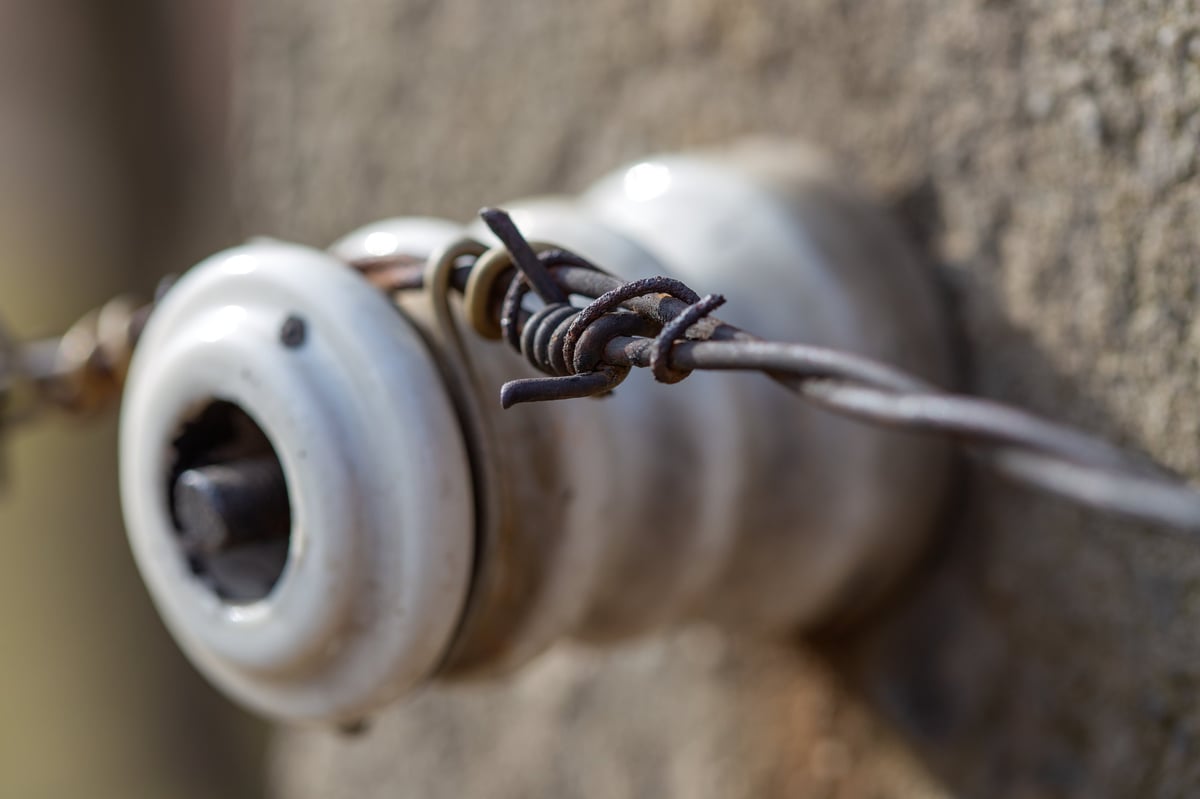
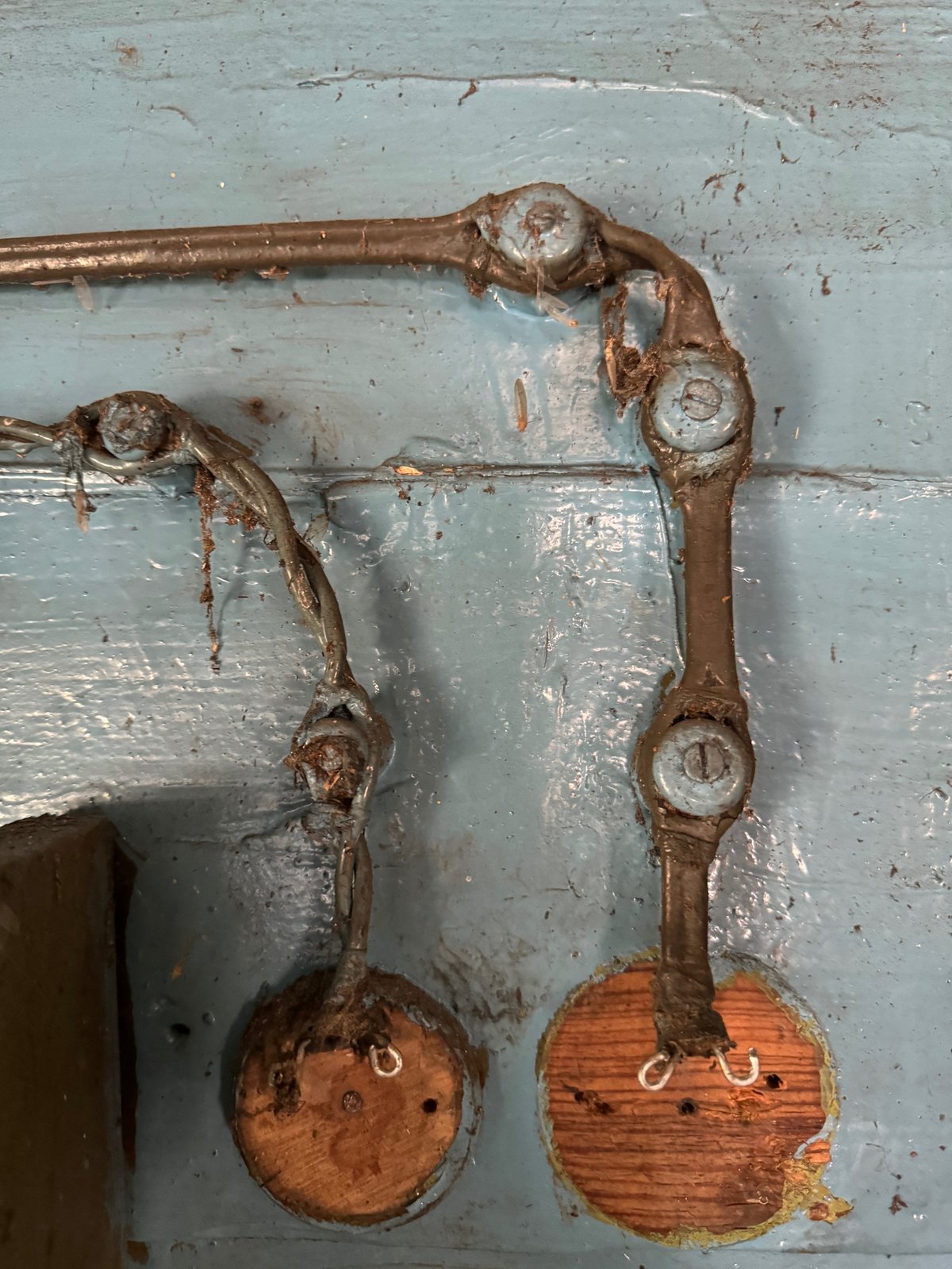
Knob-and-tube (K&T) wiring was the standard method for residential electrical installations from about 1900 through the 1940s. It consists of individual copper conductors run through ceramic tubes where they pass through joists and studs, supported by ceramic knobs along their length. We still find active K&T in older Chilliwack homes, particularly in the downtown core and in older farmhouses on the outskirts.
- K&T wiring has several inherent safety problems by modern standards. It has no ground wire — the system predates equipment grounding requirements entirely. The insulation is rubber-impregnated cloth that becomes brittle and crumbles with age. And it was designed as an open-air system: the conductors were meant to run through open stud and joist cavities with air circulation for cooling. When homeowners or contractors later add insulation over K&T (blown-in cellulose or fibreglass batts), the wiring can overheat because it no longer has the air circulation it was designed for.
- K&T wiring also suffers from decades of unqualified modifications. We frequently find K&T circuits that have been tapped into with modern Romex, creating mixed wiring systems where the K&T portion carries loads it was never designed for. Outlets have been added to K&T circuits without grounding. And splices are often made outside junction boxes — simply taped and stuffed into a wall cavity, which is a code violation and a fire hazard.
- The only complete remediation for K&T wiring is removal and replacement with modern copper wiring. Many insurers in BC now require K&T to be removed or decommissioned as a condition of coverage. Partial removal is sometimes possible — decommissioning the K&T circuits that serve high-load areas (kitchen, bathrooms, laundry) and doing a full removal when the walls are opened for other renovations.
Safety Warning
K&T wiring that has been covered by insulation is a known fire hazard. If you have an older home with attic or wall insulation and suspect K&T, have it inspected. Do not add insulation over K&T wiring.
Pre-1950
K&T Wiring Era
Two-Prong Ungrounded Outlets — No Ground, No Protection
Two-prong outlets aren't just inconvenient because you can't plug in a three-prong cord — they're missing the equipment grounding conductor that protects you from electric shock and protects your electronics from damage.
- The third prong on a modern outlet is the equipment ground — a dedicated low-resistance path to earth that carries fault current safely away if a hot wire touches the metal chassis of an appliance. Without a ground, that fault current has no safe path. If you touch the energized appliance, your body becomes the path to ground. A properly grounded system also enables surge protectors and GFCI protection to work correctly.
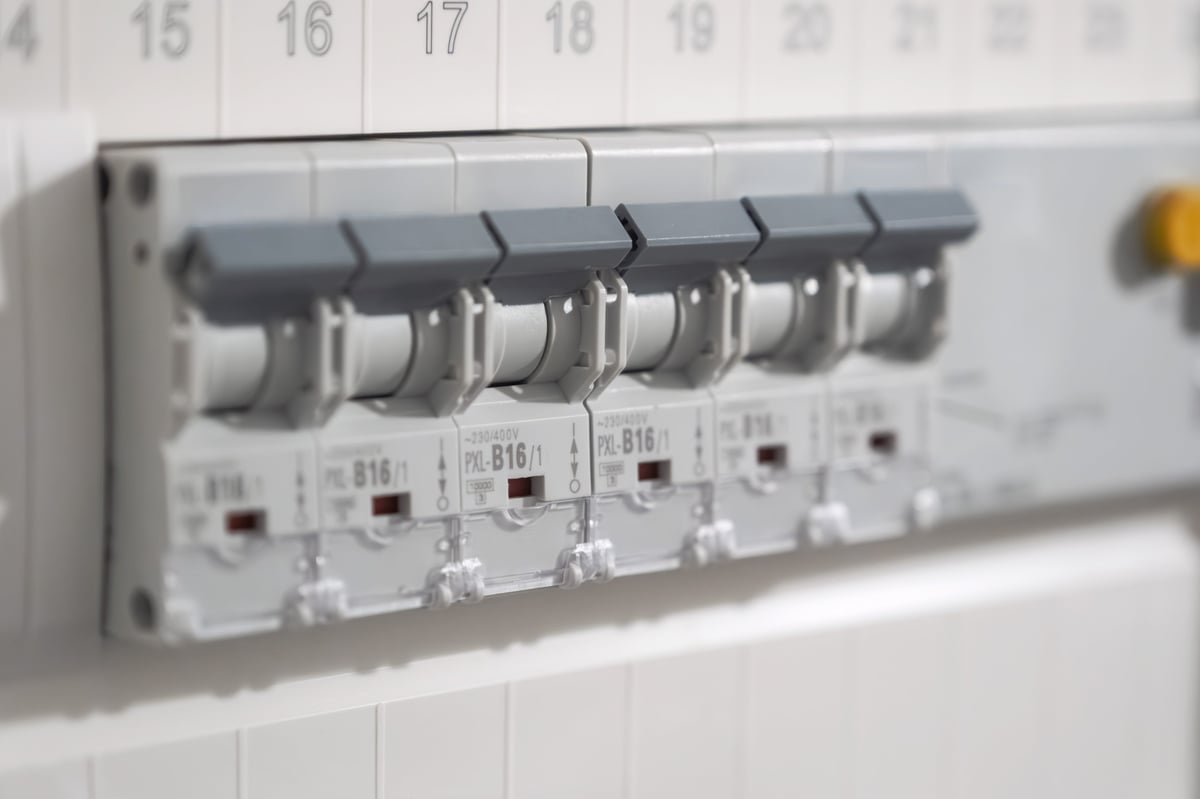
- GFCIs (ground fault circuit interrupters) do not require a ground wire to function — they detect current imbalance between hot and neutral and trip within 30 milliseconds if as little as 5mA is leaking. The CEC allows ungrounded two-prong outlets to be replaced with three-prong GFCI outlets, provided the outlet is labelled 'No Equipment Ground.' This provides shock protection but does not provide equipment grounding for surge protectors.
- The best solution for most older homes is a combination approach: replace ungrounded outlets with GFCI-protected three-prong outlets in locations where shock risk is highest (kitchen, bathroom, laundry, exterior), and run new grounded circuits to locations where equipment grounding matters (home office electronics, entertainment centre, workshop). A full rewire to add ground conductors everywhere is ideal but expensive — and often unnecessary if the wiring itself is otherwise safe.
5mA in 30ms
GFCI Trip Threshold
Fuse Boxes Instead of Circuit Breakers
If your home still has a fuse box — the grey metal box with round glass fuses that screw into sockets — your electrical service predates modern safety standards. Fuse boxes were standard in homes built before the 1960s, and while they can function, they were designed for the electrical loads of the mid-20th century.
- Fuse boxes are typically 60-amp services. A modern single-family home needs a minimum of 100 amps, and 200 amps is the current standard. A 60-amp fuse box was designed for a home with a few lights, a fridge, and a radio — not a home office setup with multiple computers, large TVs, gaming consoles, microwave ovens, and electric clothes dryers.
- The most dangerous thing we find in fuse boxes is over-fusing — a 30-amp fuse screwed into a 15-amp circuit because the homeowner got tired of replacing fuses. This completely defeats the overcurrent protection: the wiring can overheat and fail long before a 30-amp fuse blows on a circuit wired with 14-gauge copper. We've also found coins jammed behind fuses and foil wrapped around blown fuses — both extreme fire hazards.
- A fuse box replacement is a full service upgrade — new 100A or 200A panel, new meter base, new service entrance cable, and proper circuit labelling. It's not a quick swap but a complete modernisation of the electrical service. Once done, you'll have modern circuit breakers, AFCIs on bedroom circuits (required by the CEC since 2015), and capacity for everything you plug in today and tomorrow.
Safety Warning
Never install a larger fuse than the circuit is rated for. A 30A fuse on a 15A circuit will not blow until the 14-gauge wiring is already dangerously overheated.
Recalled and Hazardous Electrical Panels
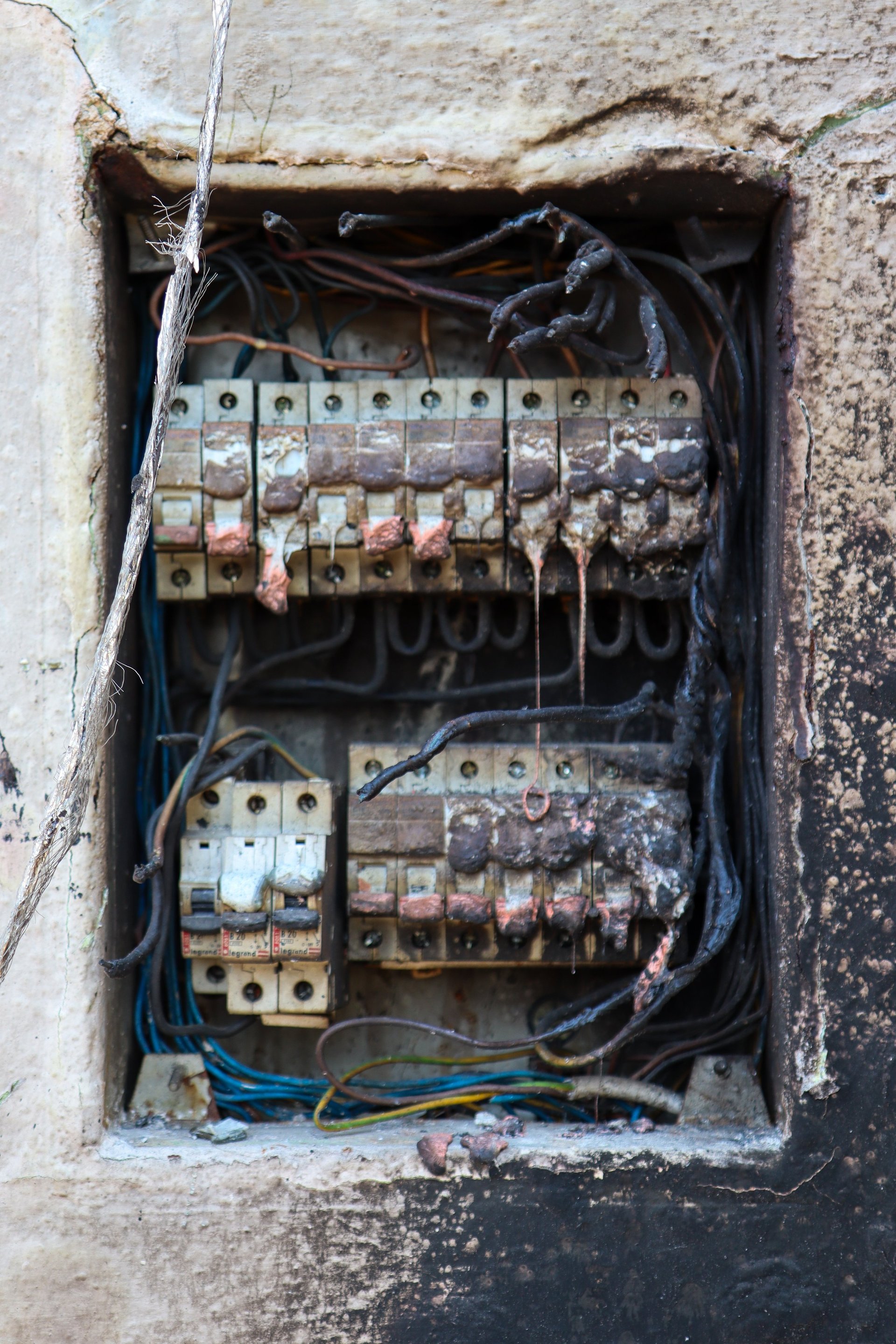
Some electrical panel brands have been linked to high failure rates — breakers that don't trip when they should, leaving circuits unprotected against overloads and short circuits. If your panel is one of these brands, it should be replaced regardless of its apparent age or condition.
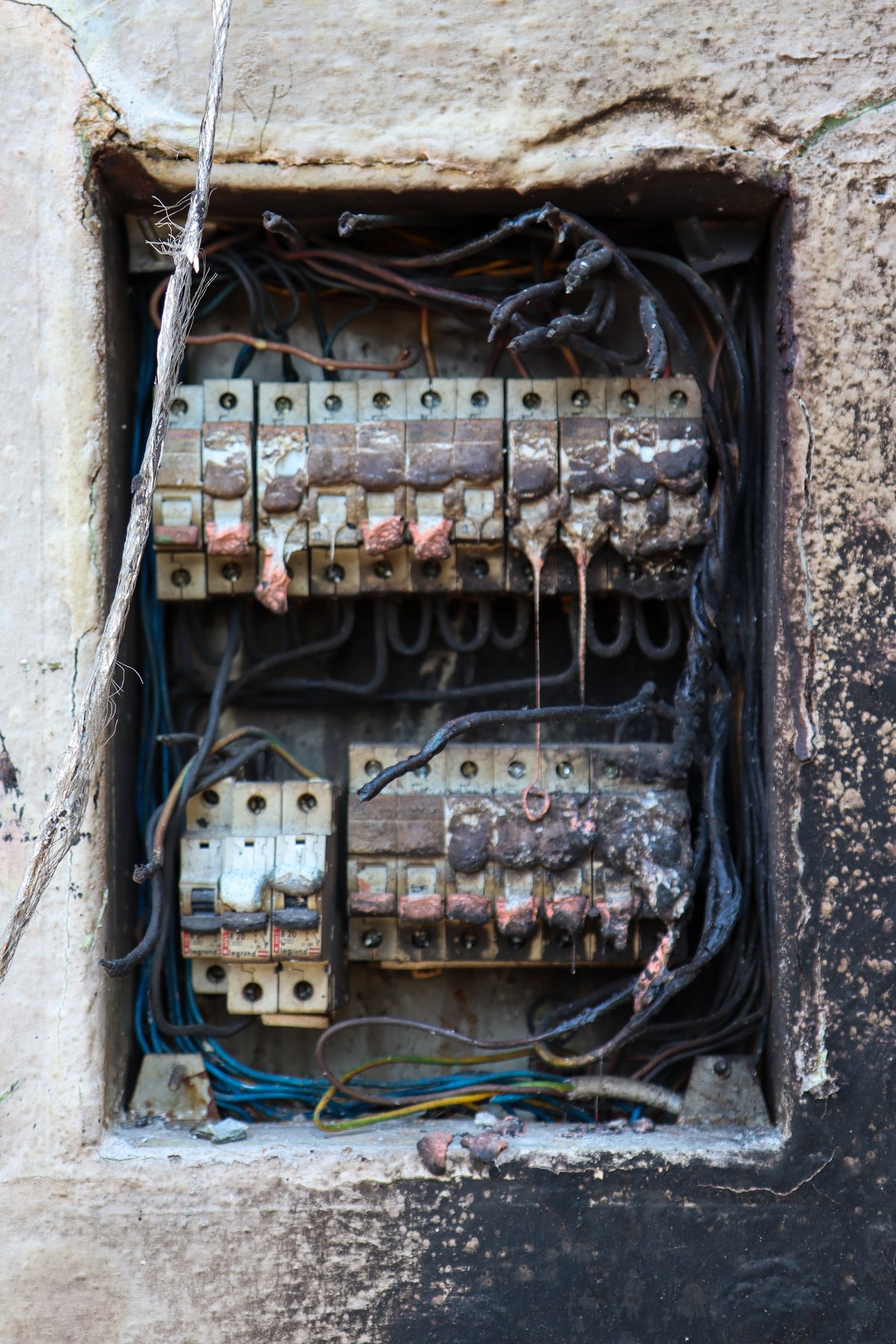
- Federal Pacific Electric (FPE) Stab-Lok panels are the most notorious. Independent testing found that FPE breakers fail to trip up to 60% of the time during overload and short-circuit testing, meaning they provide no overcurrent protection. These panels were installed widely in Canada from the 1960s through the 1980s, and they're still present in many Chilliwack homes. If your panel door has the FPE logo or 'Stab-Lok' printed on it, it needs to be replaced — period.
- Zinsco panels (also labelled as Sylvania-Zinsco) have aluminum bus bars that corrode and breakers that can appear to be off while still passing current internally. Zinsco breakers have also been found to weld themselves to the bus bar, preventing removal even when the breaker is in the off position. These panels are less common in Canada than FPE but were installed in some homes.
- Even if your panel isn't a recalled brand, panels older than 25–30 years are past their designed service life. Breaker mechanisms wear, bus bar connections oxidize, and the panel's internal clearances and insulation degrade with age and heat cycling. If your panel is original to a home built in the 1980s or earlier, replacement is a proactive safety investment — not a panic move.
Safety Warning
FPE Stab-Lok panels have been identified as a fire hazard by multiple safety authorities and are no longer accepted by many Canadian home insurers. If you have an FPE panel, do not wait for symptoms — replace it.
Up to 60%
FPE Breaker Failure Rate
What a Professional Electrical Safety Assessment Covers
A professional electrical safety assessment from CN Electrical is a thorough, room-by-room inspection of your entire electrical system — panel, wiring, devices, and service entrance — with a written report that categorizes every finding by severity and provides a prioritized remediation plan with cost estimates.
- Panel inspection: We remove the dead front (the cover over the breakers) and inspect the bus bars, breaker connections, wire terminations, grounding, and bonding. We check for corrosion, overheating, loose connections, and double-tapped breakers. We identify the panel brand and model to check against recall lists. We measure voltage under load on both legs to verify the service is balanced.
- Outlet and switch sampling: We test a representative sample of outlets and switches throughout the home — at least one per room, plus every GFCI. We check for proper polarity, grounding, and GFCI trip time. We look for backstabbed connections (wire pushed into the back of the outlet rather than screwed to the terminal), which are a common source of high-resistance faults. We open a sample of junction boxes in accessible areas (attic, basement) to inspect wiring methods and conditions.
- Service entrance and grounding: We inspect the service entrance — the mast, weatherhead, meter base, and the cables between the meter and panel. We verify the grounding electrode system: the ground rod, the grounding electrode conductor, and the bond between the ground and neutral at the main service disconnect. A compromised ground is an invisible hazard that leaves your entire home unprotected.
Electrical Safety Remediation Costs — Chilliwack, BC
Costs vary significantly depending on the size and age of your home, accessibility of wiring, and the scope of remediation required.
Aluminum wiring remediation (COPALUM pigtailing, per device)
$25 – $45
Full-home aluminum remediation (40–60 devices)
$1,500 – $3,500
Knob-and-tube removal & rewire (per room)
$2,500 – $5,000
Full-home rewire (1,500–2,500 sq ft)
$8,000 – $25,000
Outlet grounding retrofit (GFCI protection, per outlet)
$25 – $60
Fuse box replacement with 200A panel
$2,500 – $5,000
Professional Electrical Safety Assessment
$250 – $450
A thorough inspection of your entire electrical system including panel, wiring methods, outlets, switches, grounding, and bonding — with a written report and prioritized remediation plan.
What an Electrical Safety Assessment Looks Like
Schedule an Electrical Safety Assessment
Contact CN Electrical to schedule a comprehensive safety inspection. We visit your home and examine every accessible component: the panel, visible wiring in the attic and basement, a sample of outlets and switches throughout the home, grounding and bonding, and the service entrance. This takes 1–2 hours for a typical older home.
Receive Your Written Assessment Report
We provide a detailed written report identifying every hazard found, categorized by severity — from immediate fire/shock risks to recommended upgrades that improve safety and capacity. Each finding includes the specific CEC code reference and a recommended remediation approach with estimated costs.
Prioritized Remediation — Starting With the Most Critical
We work through the remediation plan in priority order. Panel replacements and recalled breakers come first — they protect everything downstream. Aluminum wiring remediation or knob-and-tube removal comes next. Ungrounded outlet retrofits and grounding improvements follow. Any single phase of work can be scheduled independently.
Final Inspection & TSBC Certificate of Compliance
After remediation, a Technical Safety BC inspector verifies the work meets the Canadian Electrical Code. You receive a Certificate of Compliance for each phase — documentation that is valuable for your home insurance and for resale disclosure.
What to Do If You Find These Hazards
If you discover aluminum wiring, knob-and-tube, or a recalled panel in your home, do not attempt to fix these issues yourself. Aluminum wiring requires specialized COPALUM or AlumiConn connectors and proper technique — crimping a standard copper wire nut onto aluminum will make the problem worse by creating a galvanic corrosion point. Knob-and-tube wiring is brittle and the insulation crumbles when disturbed — DIY repairs can create arcing points inside walls.
If your panel is warm, buzzing, or you smell burning plastic — turn off the main breaker if you can do so safely and call 1-604-798-1847 immediately. These are signs of an active electrical fault.
Is Your Older Home's Electrical System Safe?
Schedule a professional electrical safety assessment and get a clear, prioritized plan for making your home safe — whether you need a full rewire or just a few targeted fixes.