Standby vs. Portable Generators:
What Fraser Valley Homeowners Need to Know
Chris Nickel
Red Seal Journeyman Electrician — CN Electrical, Chilliwack, BC
For Fraser Valley homeowners who experience frequent winter storm outages or rely on well pumps, sump pumps, or medical equipment, a permanently installed standby generator is the most reliable solution. A Generac or Kohler standby generator with an automatic transfer switch costs $5,000–$12,000 installed — including the generator, concrete pad, gas connection, automatic transfer switch, electrical work, permit, and TSBC inspection. A portable generator with a manual transfer panel costs $1,500–$3,500 but requires you to be home, set it up, and manually switch circuits. For most Fraser Valley homeowners who want set-it-and-forget-it backup power, a standby unit is worth the investment. See our whole-home generator installation services across the Fraser Valley.
The Fraser Valley sees some of the most frequent and prolonged power outages in British Columbia. Winter storms take down overhead lines along Highway 1 and through rural corridors. Summer wildfire season brings planned outages and infrastructure shutdowns. And even in mild weather, a vehicle hitting a pole can knock out power to an entire Chilliwack neighbourhood for 6–12 hours. A home backup generator isn't a luxury here — for many homeowners, it's essential infrastructure.
But the generator market is complicated. Standby or portable? Generac or Kohler? Natural gas, propane, or diesel? What size do you actually need? Does your electrical panel need a transfer switch, and what's an automatic transfer switch going to cost? For residential electrical diagnostics and panel repair before installing a generator, we'll assess your existing system. These are the questions we answer every week at CN Electrical.
This guide draws on our experience installing generators across the Fraser Valley — from suburban homes in Sardis and Promontory to acreages in Rosedale, Yarrow, and the Canyon corridor, plus homes across Abbotsford. We'll walk you through the decisions, the costs, and the installation process so you can choose the right backup power solution for your home. For a free quote on a Generac or Kohler standby generator installation in Chilliwack, contact us directly.
What You'll Learn in This Guide
Click the quick-links below to jump to any section.
- 1.Standby vs. Portable Generators — The Fundamental Difference
- 2.Generac vs. Kohler — Which Standby Generator Is Right for Your Home?
- 3.How to Size a Generator — What You Actually Need to Power
- 4.Natural Gas, Propane, or Diesel — Which Fuel Type Works for Your Property?
- 5.Automatic Transfer Switches — The Brain of a Standby System
- 6.Real Installation Costs for Fraser Valley Homeowners
Plus: maintenance schedules, noise considerations, and when a portable generator is actually the better choice.
Standby vs. Portable Generators — The Fundamental Difference
The first decision is the biggest one: a permanently installed standby generator that starts automatically, or a portable generator you wheel out and set up manually. The right choice depends on how often you lose power, what you need to keep running, and whether you're home when outages happen.
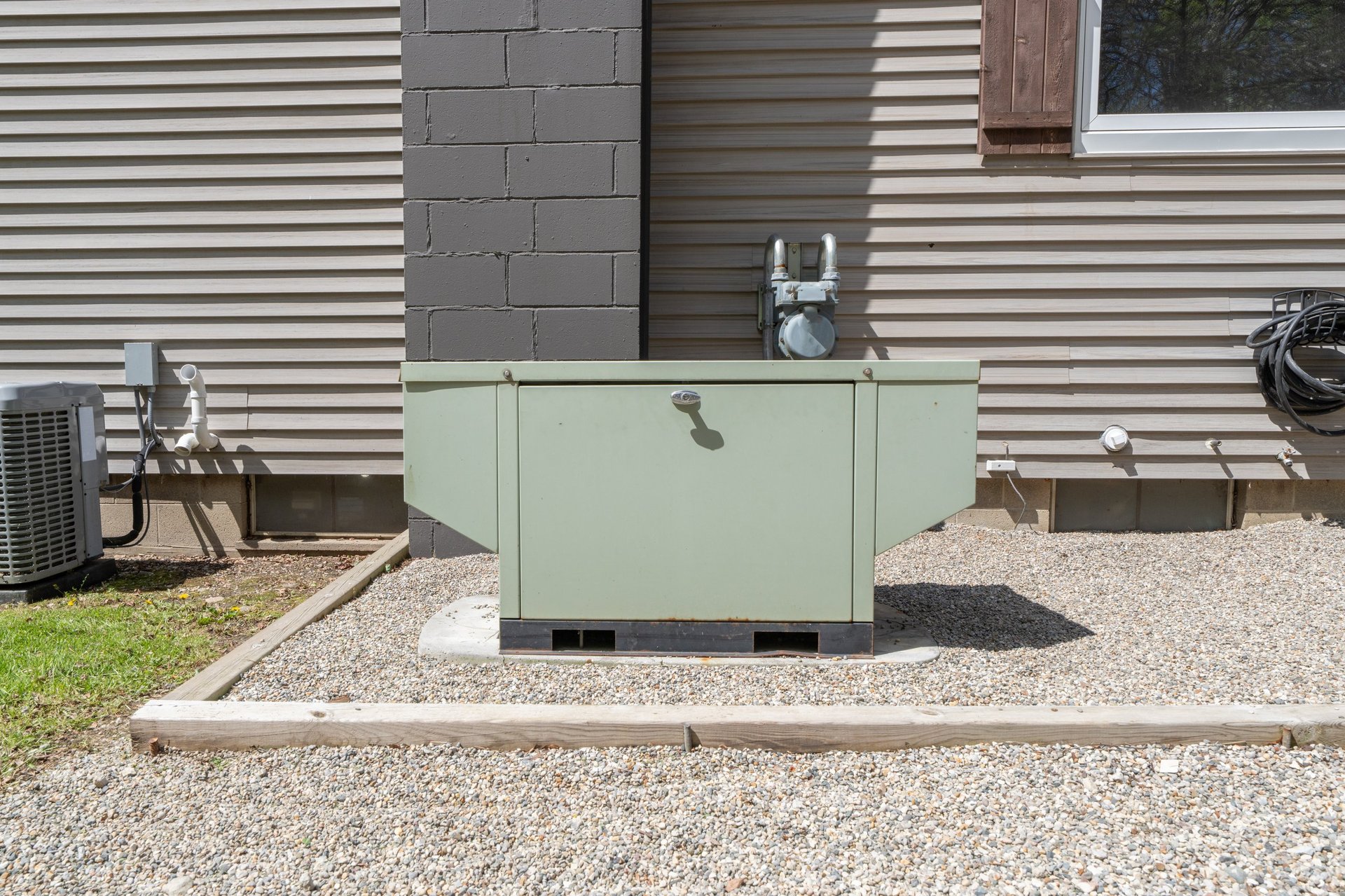
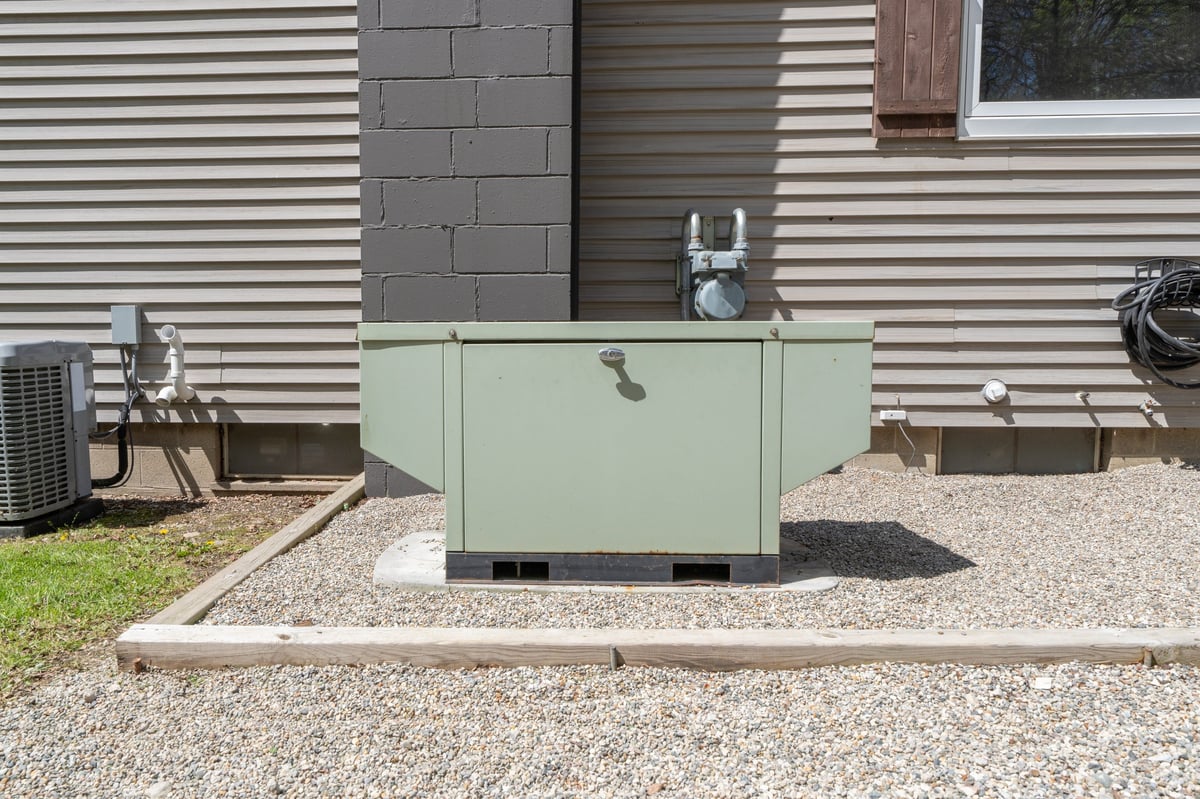
- A standby generator is permanently installed on a concrete pad outside your home, connected to your natural gas line or a propane tank, and wired to an automatic transfer switch beside your main electrical panel. When the power goes out, the generator senses the outage, starts itself within 10–30 seconds, and the transfer switch automatically disconnects your home from the grid and connects it to the generator. When grid power returns, the switch transfers back and the generator shuts down. You don't lift a finger — it works whether you're home or away.
- A portable generator is a gasoline or propane-powered unit on wheels that you store in a shed or garage. When the power goes out, you wheel it outside, fill it with fuel (or connect a propane tank), start it manually, run extension cords to your essential appliances, or plug it into a manual transfer panel if one is installed. A manual transfer panel is a sub-panel with a mechanical interlock that prevents the generator and grid from being connected simultaneously — it's safe and code-compliant, but it requires you to be home to operate it.
- The key scenarios where a portable generator makes sense: you experience infrequent, short outages (1–2 per year, under 4 hours), you only need to power a fridge, freezer, and a few lights, or budget is the primary constraint. For Fraser Valley homes that lose power multiple times per winter, rely on well pumps (no power = no water), have sump pumps, or have medical equipment, a standby unit is the right call.
10–30s
Standby Generator Auto-Start Time
Generac vs. Kohler — Which Standby Generator Is Right for Your Home?
Generac and Kohler dominate the Canadian residential standby generator market. Both are excellent units with strong dealer networks, but they differ in engine type, warranty, and fuel efficiency.
- Generac Guardian series (10kW–26kW): The most widely installed residential standby generator in North America. Generac uses an air-cooled engine that runs at 3,600 RPM and includes Wi-Fi monitoring via the Mobile Link app. The 22kW model covers most 200A panel loads for a 2,000–3,000 sq ft home including well pumps, sump pumps, fridges, freezers, lights, and select HVAC circuits. Generac's warranty is 5 years (parts, labour, and travel — if installed by a Generac-certified dealer).
- Kohler 20RESCL (20kW): Kohler uses a hydraulic-lifter engine that runs at 3,600 RPM but is typically quieter and slightly more fuel-efficient than the Generac equivalent. Kohler's OnCue Plus monitoring system provides remote status and maintenance alerts. The Kohler warranty is 5 years / 2,000 hours. Kohler's corrosion-resistant enclosure has an edge for homes in wetter areas — relevant for Fraser Valley properties that get heavy rainfall.
- Both brands are excellent and the choice often comes down to installer preference, local dealer support, and availability. CN Electrical installs both and can help you compare the specific models that fit your home's load calculation and budget. The generator is only as good as the installation — the transfer switch, wiring, gas connection, and commissioning are what make a system reliable for 20+ years.
20–24kW
Typical Residential Generator Size
How to Size a Generator — What You Actually Need to Power
Generator sizing isn't about square footage — it's about which circuits you want to back up and what their actual starting and running loads are. A licensed electrician performs a load calculation to determine the right generator size for your specific panel and priorities.
- Essential circuits only (10kW–14kW): Fridge, freezer, sump pump, well pump, furnace blower (for natural gas forced air), a few lights, and outlets for charging devices. This covers basic habitability — food preservation, water, heat, and limited lighting. A 10kW–14kW generator can carry these loads and is the most budget-friendly standby option.
- Whole-home with load management (20kW–24kW): Most circuits in the home are backed up, but large loads are managed — an air conditioner may be locked out during generator operation, or an electric range may be excluded. A load-shedding module can temporarily drop non-critical loads (like an EV charger or electric water heater) to keep the generator within its capacity. This is the most common configuration for Fraser Valley homes.
- Full whole-home (26kW+): Every circuit in the panel is backed up with no load shedding required. This typically requires a larger generator and a higher-capacity gas service. It's the right choice for large homes, homes with multiple heat pumps, or properties where critical loads are distributed across many circuits. As generator size increases, so does fuel consumption — a 26kW unit on natural gas uses roughly 3–4× the fuel of a 10kW unit under load.
Important
An undersized generator will stall or trip its own breaker under load — leaving you in the dark despite having spent thousands on backup power. Always let a licensed electrician perform the load calculation before selecting a generator size.
Natural Gas, Propane, or Diesel — Which Fuel Type Works for Your Property?
The fuel source determines not just installation cost but also how long your generator can run continuously during an extended outage. In the Fraser Valley, natural gas is the default for most urban and suburban homes; propane is common for rural properties without natural gas service.
- Natural gas: If your home already has a FortisBC natural gas connection, this is the simplest and most cost-effective option. The generator connects to your existing gas line (a dedicated branch from the meter, not a shared appliance line). Natural gas is unlimited — the generator runs as long as the gas grid is operational, which during most outages it is. The downside: generator output is slightly de-rated on natural gas compared to propane (a 22kW unit on natural gas may deliver ~20kW).
- Propane: For rural properties without natural gas — common in Rosedale, Yarrow, Agassiz, and parts of the Canyon corridor — a propane tank is the standard solution. A 500-gallon (1,893L) propane tank can run a 22kW generator at 50% load for roughly 5–7 days before needing a refill. Propane has an indefinite shelf life (unlike gasoline) and the generator runs slightly more efficiently on propane. The tank itself adds $1,500–$3,500 to the total installation.
- Diesel: Rarely used for residential standby generators in BC — diesel generators are more common for commercial and industrial applications. Diesel fuel degrades over time (6–12 months without treatment), diesel generators are noisier, and diesel tanks require secondary containment. For residential use, natural gas or propane are almost always the better choice.
Automatic Transfer Switches — The Brain of a Standby System
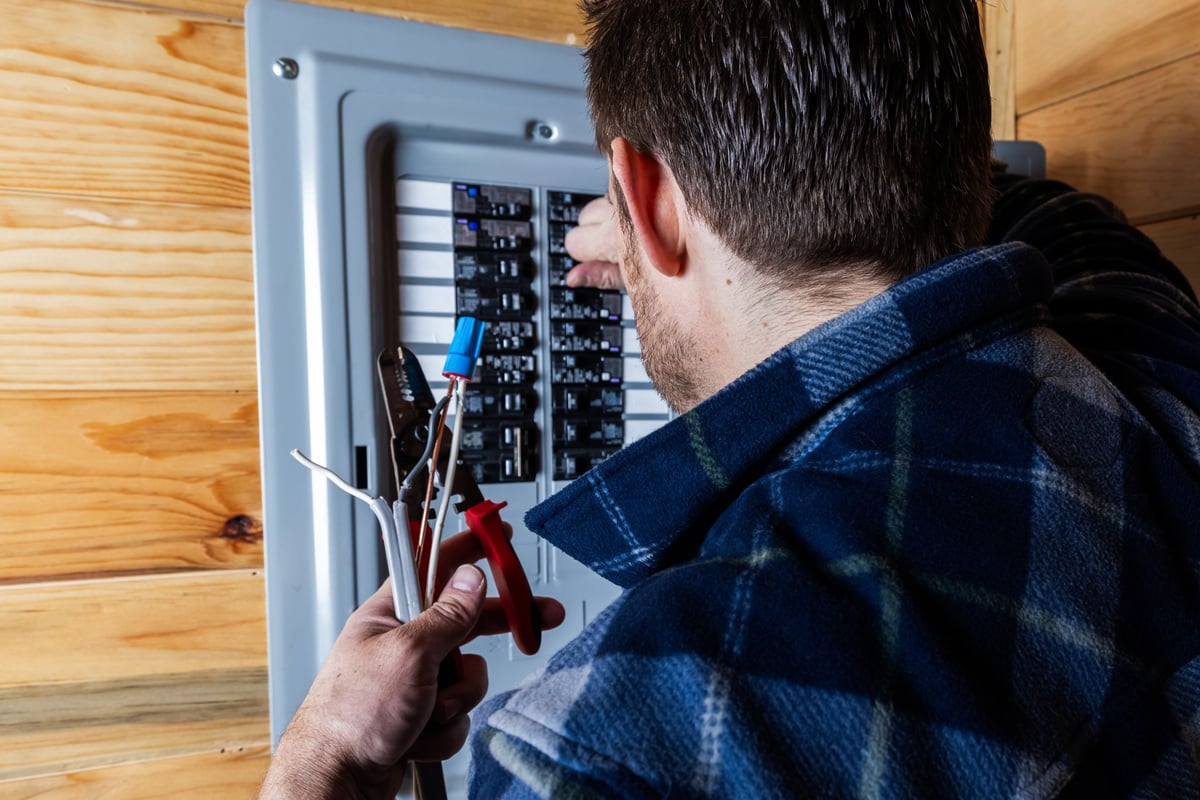
The automatic transfer switch (ATS) is what separates a generator from a generator system. It's a device installed beside your main electrical panel that constantly monitors grid voltage. When it detects an outage, it sends a start signal to the generator, waits for stable voltage, then physically switches your home's circuits from the grid to the generator.
- Service-rated vs. non-service-rated: A service-rated ATS includes a main breaker and can serve as the first point of disconnect after the meter — essentially replacing the main breaker in your existing panel. This is the standard configuration for whole-home generators. A non-service-rated ATS is a sub-panel that backs up selected circuits only. It's less expensive but doesn't back up the entire home.
- Load-shedding capability: Most modern ATS units from Generac and Kohler include load-shedding modules that can automatically drop non-critical loads (EV charger, electric water heater, hot tub, air conditioner) if the generator approaches capacity. This allows a smaller generator to back up a larger home by intelligently managing which loads run simultaneously. Load shedding makes a 20kW generator viable for homes that might otherwise need a 26kW unit.
- The transfer switch must be sized to match your electrical service, not the generator. A home with a 200A service needs a 200A-rated transfer switch, even if the generator is only 22kW. The switch must be capable of passing the full 200A from the grid under normal operation — it only limits capacity during generator operation.
200A
Required ATS Rating (200A Service)
Real Installation Costs for Fraser Valley Homeowners
Here's what we're actually quoting for generator installations across the Fraser Valley in 2026. These are real numbers that include the generator, transfer switch, pad, gas connection, electrical work, permit, and TSBC inspection.
- Entry-level standby (10kW–14kW with essential-circuit ATS): $6,000–$9,000 installed. Backs up 8–12 essential circuits — fridge, freezer, well pump, sump pump, furnace, and selected lights and outlets. This configuration works well for smaller homes or homeowners who want emergency habitability without backing up every circuit.
- Mid-range standby (20kW–24kW with service-rated ATS, whole-home with load shedding): $8,000–$12,000 installed. This is the most common configuration for 2,000–3,000 sq ft Fraser Valley homes. It backs up nearly every circuit and uses load shedding to manage large loads like air conditioners and EV chargers.
- Premium standby (26kW+ with full whole-home ATS): $12,000–$18,000 installed. Every circuit backed up, no load shedding required. Typically used for larger homes, homes with multiple HVAC zones or heat pumps, or properties where critical loads can't be grouped into a sub-panel.
- Portable generator with manual transfer panel: $1,500–$3,500 including the generator, manual transfer panel, inlet box, and electrical work. You supply the fuel and the manual labour during an outage. This is a legitimate, code-compliant option — it's just not automatic.
Important
The generator is roughly half the total cost. The other half is the transfer switch, concrete pad, gas connection, electrical labour, and permits. A $5,500 generator does not cost $5,500 installed.
Generator Installation Cost Breakdown — Fraser Valley, BC
A permanently installed standby generator with automatic transfer switch for a typical 2,000–3,000 sq ft single-family home.
Generac Guardian 22kW standby generator
$5,500 – $7,000
Kohler 20RESCL 20kW standby generator
$5,200 – $6,800
Concrete pad & mounting
$400 – $800
Automatic transfer switch (200A service-rated)
$800 – $1,500
Natural gas line & connection (if nearby)
$300 – $800
Propane tank install (if no natural gas available)
$1,500 – $3,500
Electrical labour, permit & TSBC inspection
$1,500 – $3,000
Portable generator + manual transfer panel (alternative)
$1,500 – $3,500
Typical Total — Standby Generator System (Installed)
$8,000 – $14,000
Natural gas Generac or Kohler system with automatic transfer switch, concrete pad, electrical work, permit, and TSBC inspection. Propane installations add $1,500+ for the tank.
What a Standby Generator Installation Looks Like
Free On-Site Assessment & Load Calculation
We visit your home, evaluate your electrical panel, measure gas service proximity, discuss which circuits you want backed up, and perform a load calculation to right-size the generator. We provide a firm written quote — typically within 24–48 hours.
Gas Service & Permitting
We coordinate with FortisBC (for natural gas) or a propane supplier. We submit the Technical Safety BC electrical permit and, if needed, the gas permit. We also handle any municipal setback or noise bylaw requirements.
Installation — Generator, Transfer Switch & Wiring
Our team pours the concrete pad, places the generator, installs the automatic transfer switch beside your main panel, runs the control and power wiring between the generator and transfer switch, connects the gas line, and commissions the entire system. A typical standby installation takes 1–2 days.
TSBC Inspection & Final Commissioning
The Technical Safety BC inspector reviews both the electrical and gas portions. Once approved, we perform a full-load test — simulating a grid outage under real load — to verify the generator starts, transfers, and carries the backed-up circuits as designed. You receive your Certificate of Compliance and a walkthrough of the system operation.
A Word About Generator Safety
Never operate a portable generator indoors, in a garage, or near open windows — carbon monoxide poisoning kills people every winter in BC. A standby generator installed outdoors on a concrete pad with proper setbacks eliminates this risk. Also: never backfeed a generator through a dryer outlet or any other makeshift connection to your home's wiring. This is illegal, extremely dangerous to BC Hydro line workers, and a fire hazard. A proper transfer switch — automatic or manual — isolates your home from the grid before the generator can energize your panel.
If you are using a portable generator during an outage, keep it at least 20 feet from your home with the exhaust pointing away, use heavy-duty outdoor-rated extension cords, and never refuel it while it's running. For businesses needing backup power, our commercial electrical repair team provides emergency generator tie-in and transfer switch diagnostics. CN Electrical can install a manual transfer panel for your portable generator so you can power essential circuits safely and legally — call 1-604-798-1847 to discuss.
Don't Wait for the Next Outage
Every winter storm season, we get a rush of calls from homeowners who waited too long. Get your backup power sorted before the next outage — start with a free on-site assessment and quote.